 Crochet Henouda
Hexagon Granny Square Cardigan: 3 Color Ideas for Fall
The hexagon cardigan is the easiest sweater shape in crochet: two hexagons, two seams, no shaping. Here are three color directions to try this fall.
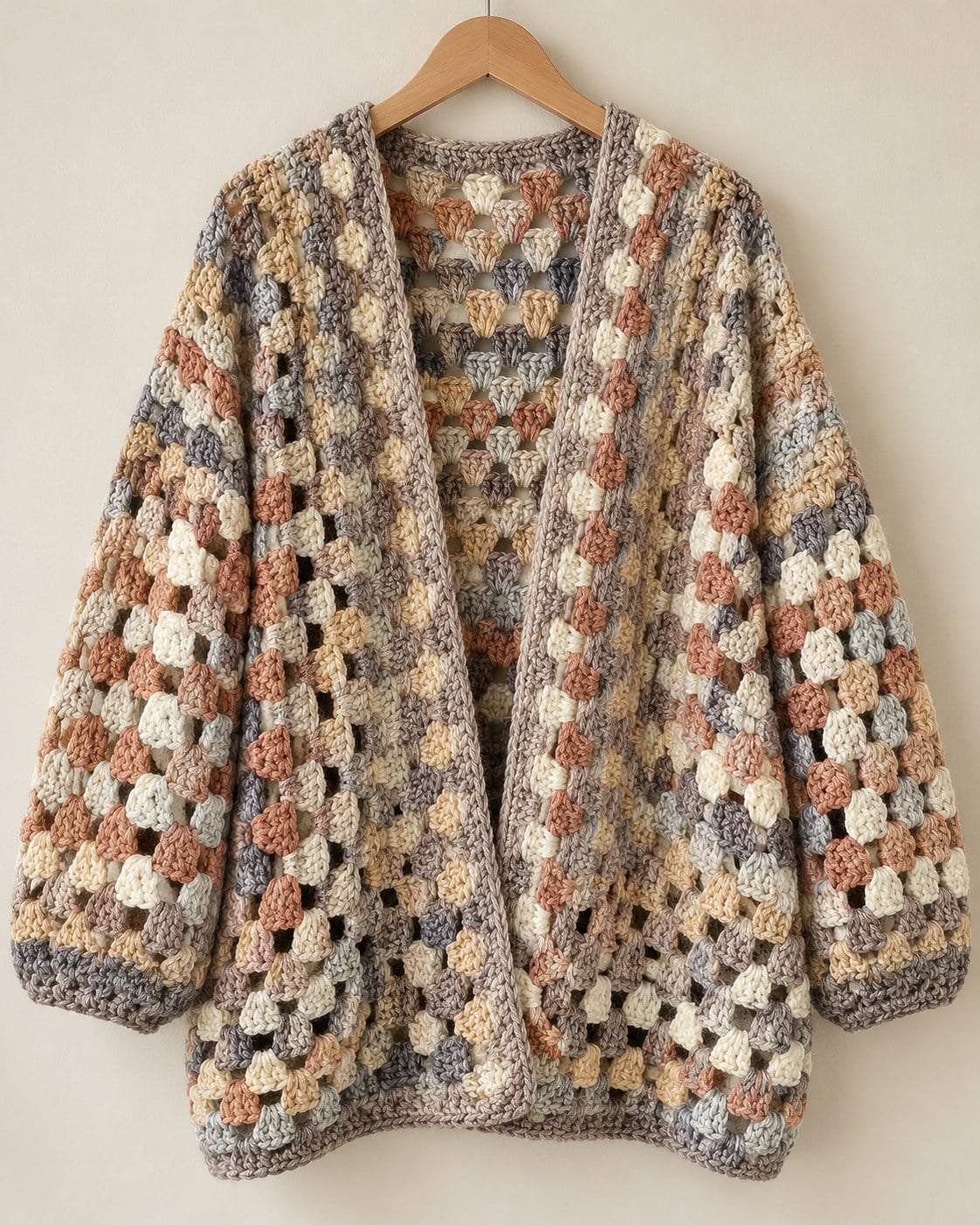
If you have been putting off crocheting a sweater because of the shaping, the hexagon cardigan is the one to start with. There are no armholes to decrease, no sleeve caps to set in, and no fiddly sizing chart to follow. You crochet two large hexagons, fold them, seam two short edges, and you have a cardigan.
It is also the perfect fall project. The granny stitch works up quickly in worsted weight yarn, the open fabric is warm without being heavy, and the loose shape layers over a t-shirt on a mild day or a sweater when it turns cold.
Below are three directions to take the same simple shape — a quiet neutral version, a bright multicolor one, and a jewel-tone version with ribbed edges. Each one uses exactly the same construction, so pick whichever palette you would actually reach for.
How a Hexagon Cardigan Comes Together
Start with a flat hexagon worked in the round, usually in granny stitch. Keep going until the hexagon measures roughly from your wrist to your opposite wrist, folded in half.
Now fold that hexagon in half so two of its six sides meet. Seam those two sides together: the closed seam becomes the underarm, the fold becomes the top of the sleeve, and the remaining sides fall open as the body. Make a second hexagon the same way, join the two halves down the center back, and the cardigan is done.
That is the whole trick. Because the sleeve is simply part of the hexagon, there is nothing to shape and nothing to measure twice. A bigger hexagon gives you a longer, slouchier cardigan; a smaller one gives you a cropped shape. The same instructions work at any size, which is why this cardigan suits beginners so well.
1. Warm Neutrals You Can Wear With Everything
This is the version that will get the most wear. The palette stays in one family — cream, caramel, soft terracotta, warm grey — so nothing fights, and the whole cardigan reads as one calm piece rather than a set of stripes.
The trick here is to let the values do the work. Put your lightest cream next to your deepest grey so the rounds stay readable, and repeat each color at least twice as you work outward so the eye travels across the whole garment. Finishing the cuffs and the front edge in the single darkest shade frames everything and hides any small wobble in your seams.
If you are nervous about choosing colors, this is the safest place to start. A neutral hexagon cardigan goes over jeans, a dress, or workwear, and it will not look dated in two years.
2. Bright Multicolor for Gray Fall Days
This is the one to make when November gets dark. Coral, orange and teal are high-contrast and warm, and the soft periwinkle border cools the whole thing down just enough that it does not shout.
Scrap yarn is ideal here. Because each round is only a few stitches deep, you can use up partial skeins without anyone noticing that a color appears only once. The one rule worth keeping: pick a single color for every border — cuffs, front band, hem — and buy enough of it up front. That one repeated shade is what turns a pile of leftovers into a deliberate design.
Wide kimono-style sleeves like these come from working the hexagon a little larger before you fold. If you prefer a narrower sleeve, fold sooner and add the extra rounds to the body instead.
3. Jewel Tones With Ribbed Edges
Mustard, teal, coral and grey over a deep burgundy — this is the most structured of the three, and the reason is the ribbing. Adding bands of back-loop single crochet at the cuffs, the hem and down the front changes the whole garment.
Ribbing does three useful things. It pulls in the cuffs so the sleeves stop sliding down your hands, it gives the front edge enough weight to hang straight instead of curling, and it makes a granny-stitch cardigan look finished rather than homemade. If you only add ribbing in one place, make it the front band.
This is also the version that holds its shape best over time. Granny stitch grows as it is worn, especially in cotton, and firm ribbed edges slow that down.
Choosing Yarn for a Hexagon Cardigan
Worsted weight (4) is the sweet spot. It works up fast enough that the project stays fun, and it gives the fabric enough body to hang nicely without turning stiff.
For fall, a wool or wool blend gives the most warmth and springs back into shape after wearing. Acrylic is hard-wearing, machine washable and cheap enough to make a whole cardigan from, which matters when a garment takes this much yarn. Cotton makes a beautiful drapey cardigan but it is heavy and it stretches, so size down and add ribbing if you go that route.
Plan on roughly 1,200 to 1,800 yards for an adult cardigan, depending on your size and how long you want it. Buy a little more than you think you need, and keep the dye lot numbers in case you run short.
A Few Things Worth Knowing Before You Start
Make a gauge swatch, even for a shape this forgiving. Hexagon cardigans are sized by measuring, not by counting rounds, so if your tension is loose the whole garment grows — and it grows in every direction at once.
Measure against a cardigan you already own and like rather than against your body. Lay it flat, measure cuff to cuff, and keep working your hexagon until it is half that width.
Finally, block the hexagons before you seam them. Granny stitch relaxes a lot when it is wet, and a flat, even hexagon is much easier to seam than a curling one.
Frequently asked questions
How much yarn do I need for a hexagon cardigan?
Plan on about 1,200 to 1,800 yards of worsted weight (4) yarn for an adult cardigan. The exact amount depends on your size and how long you want it. Buy a little extra and note the dye lot in case you run short.
Is a hexagon cardigan good for beginners?
Yes. It is one of the easiest garments in crochet because there is no armhole shaping and no sleeve cap. If you can work a granny stitch in the round and sew a straight seam, you can make one.
What is the best yarn for a hexagon cardigan?
Worsted weight (4) is ideal. Wool or a wool blend gives the most warmth and keeps its shape. Acrylic is affordable and machine washable. Cotton drapes beautifully but is heavy and stretches, so add ribbed edges if you use it.
How do I stop my hexagon cardigan from stretching out?
Add bands of back-loop single crochet ribbing at the cuffs, hem and front edge. Ribbing holds the shape, stops the sleeves sliding down and keeps the front from curling. Choosing wool over cotton also helps.
Can I make a hexagon cardigan with scrap yarn?
Yes, and it is one of the best uses for leftovers. Each round is only a few stitches deep, so a color can appear just once without looking out of place. Use one single color for all the borders to tie everything together.
More wearables you’ll love
 Wearables
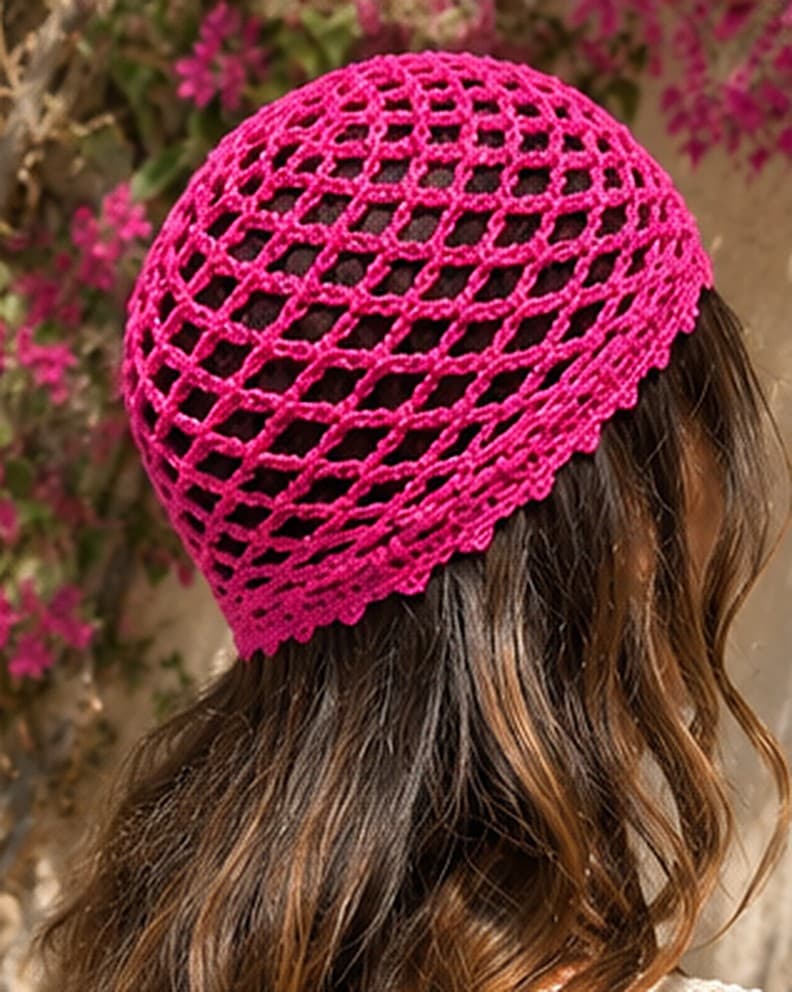
Crochet Mesh Hats: Openwork Styles for Summer
Light, fast and far more delicate than they look. How openwork crochet hats are built, which thread to use, and a full crochet hat size chart.
 Wearables
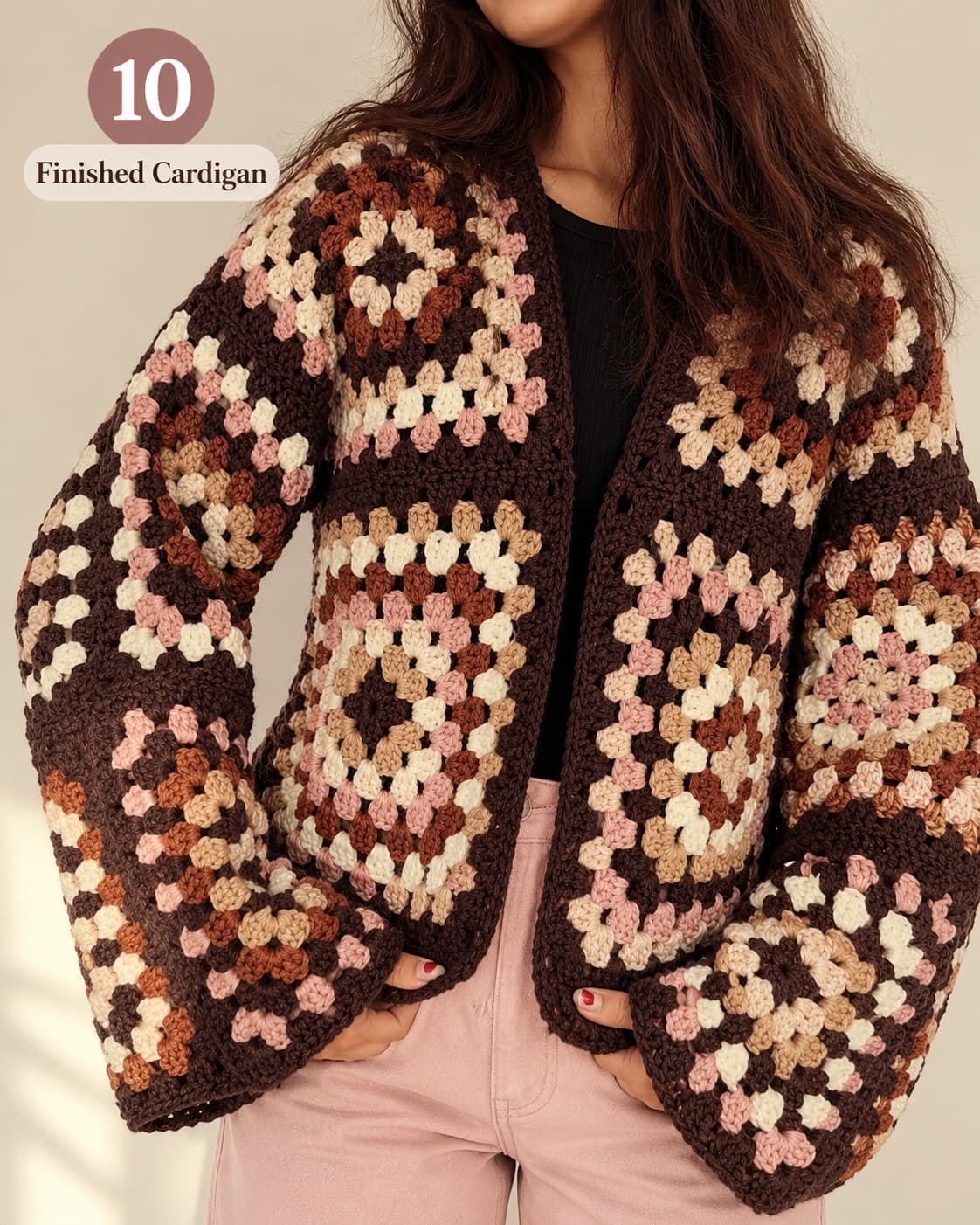
Simple Granny Square Cardigan: A Cozy Neutral Classic
Chocolate brown, cream and dusty rose squares with a dark frame around every one. How to choose the colors, join the squares and add the ribbing.