 Crochet Henouda
US vs UK Crochet Terms: Free Conversion Chart
Why a UK double crochet is a US single crochet, a full US to UK conversion chart, and how to tell which terms a pattern uses.
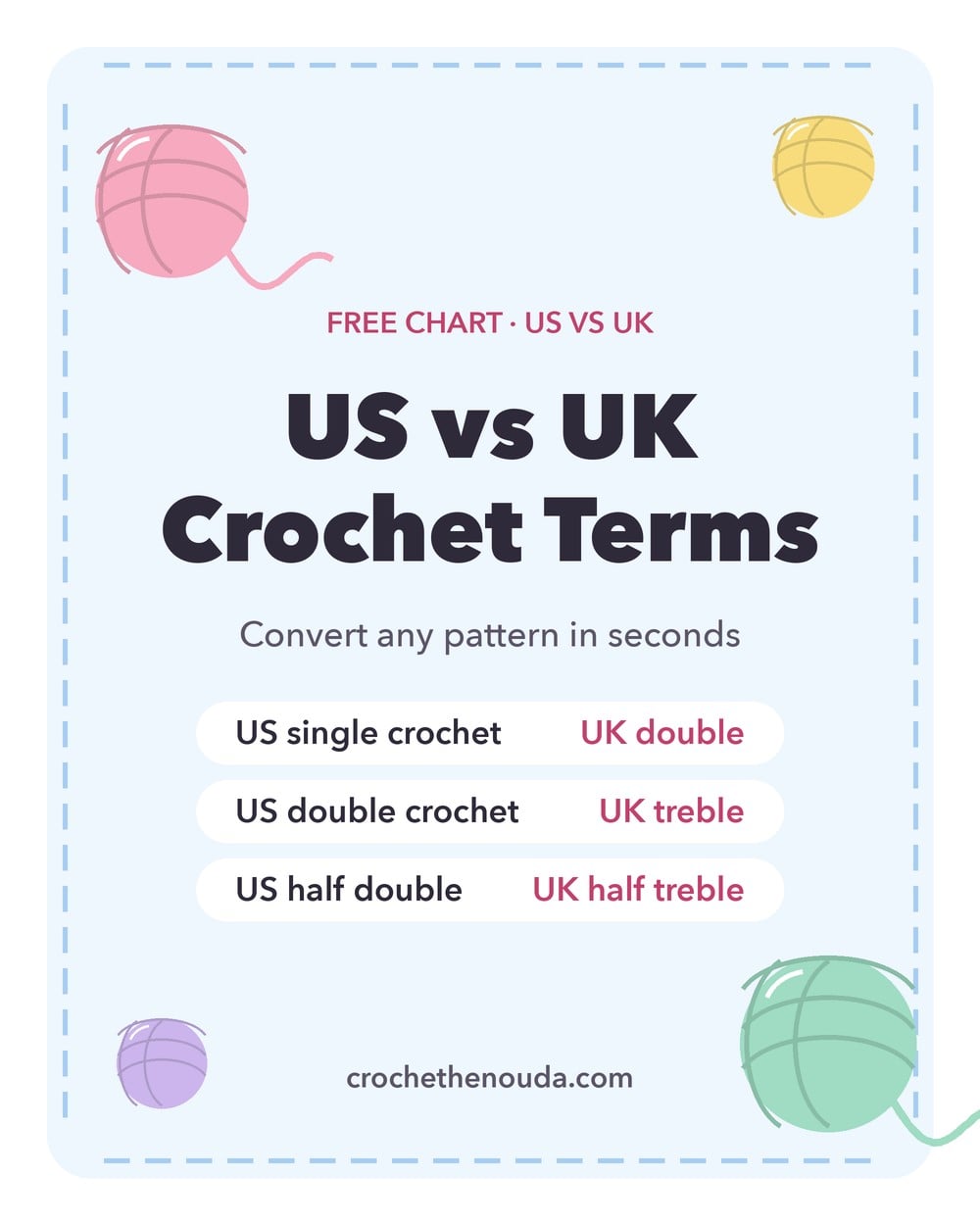
You found a beautiful pattern, picked your yarn, started the first row… and something looks wrong. The stitches are too tall, the fabric is too loose, and the stitch count never matches. Nine times out of ten, the problem is not you: the pattern is written in UK crochet terms and you are reading it as US terms (or the other way around).
The two systems use the same names for different stitches. A "double crochet" in a UK pattern is a "single crochet" in a US pattern. Once you know the trick, converting takes seconds, and this page gives you the full chart.
All the patterns on this blog are written in US terms, so you can keep this chart open beside any of them — and if you like to crochet from paper, you'll find ad-free, printable PDF patterns in my Etsy shop.
Why US and UK Terms Are Different
The difference comes from how each system counts. In US terms, a stitch is named after the number of loops you pull through at the end of the first step. In UK terms, it is named after the number of loops on your hook after you pull up the first loop.
So the smallest everyday stitch is a "single" in the US and a "double" in the UK — and every stitch after it shifts up one name. That single shift explains the whole chart below.
US to UK Crochet Terms Chart
| US term | US abbreviation | UK term | UK abbreviation |
|---|---|---|---|
| slip stitch | sl st | slip stitch | ss |
| chain | ch | chain | ch |
| single crochet | sc | double crochet | dc |
| half double crochet | hdc | half treble crochet | htr |
| double crochet | dc | treble crochet | tr |
| treble crochet | tr | double treble crochet | dtr |
| double treble crochet | dtr | triple treble crochet | trtr |
| single crochet 2 together | sc2tog | double crochet 2 together | dc2tog |
| double crochet 2 together | dc2tog | treble crochet 2 together | tr2tog |
| skip | sk | miss | — |
| yarn over | yo | yarn round hook | yrh |
| gauge | — | tension | — |
| fasten off | FO | fasten off | — |
The trap is clear: "dc" means a different stitch in each system. In a US pattern, dc is a tall stitch with one yarn over. In a UK pattern, dc is the short stitch Americans call single crochet.
Tip: Bookmark this page or save it to Pinterest so the chart is with you every time you open a new pattern.
How to Tell Which Terms a Pattern Uses
Most good patterns say "US terms" or "UK terms" near the top. When they don't, look for these clues:
- Single crochet (sc) appears anywhere → US terms. UK crochet has no stitch called single crochet.
- Half treble (htr), "tension" or "miss" appear → UK terms.
- The designer's location. A designer in the US or Canada almost always writes in US terms; in the UK, Ireland, Australia or New Zealand, usually UK terms.
- The first round of a circle. A US amigurumi pattern often starts with "6 sc in a magic ring". A UK one says "6 dc in a magic ring" for exactly the same thing.
If you are still unsure, crochet a small swatch both ways and compare it to the photo. The right version will match.
Converting a Pattern Step by Step
You don't need to rewrite the whole pattern. Do this instead:
- Highlight every stitch name in the pattern with a marker.
- Write the converted name above it using the chart, starting with the most common stitch.
- Leave chains and slip stitches alone — they are the same in both systems.
- Check the stitch count at the end of the first row. If it matches the pattern, your conversion is right.
For a quick practice, try my free pumpkin coaster pattern: it is short, written in US terms, and uses only a few basic stitches.
Yarn Weights: US vs UK Names
Yarn names are different too. The equivalents below are approximate, because brands vary — always check the yardage and the recommended hook on the label.
| US name | Weight number | Closest UK / AU name |
|---|---|---|
| Lace | 0 | 1-ply / 2-ply |
| Fingering | 1 | 4-ply |
| Sport | 2 | 5-ply (closest; less common) |
| DK / light worsted | 3 | DK (8-ply) |
| Worsted | 4 | Aran (10-ply), slightly thicker |
| Bulky | 5 | Chunky (12-ply) |
| Super bulky | 6 | Super chunky |
The weight number (0 to 7) is printed on most labels and is the same everywhere, so it is the safest way to compare. You can find the matching hook for each weight in my crochet hook sizes chart.
Hook Sizes Are Different Too
US hooks use letters and numbers (H-8, J-10), while older UK hooks use a numbering system that goes down as the hook gets bigger. Today most hooks also print the size in millimeters, and that is the number to trust. The full conversion is in the hook sizes chart.
Ready for Your Next Project?
Now that you can read both systems, every pattern is open to you. If you'd like a pattern you can print and keep beside you while you work, you'll find ad-free PDF versions of my patterns in my Etsy shop. Every purchase also helps me keep publishing free patterns here.
New to reading patterns? My guide on how to read a crochet pattern walks through abbreviations, repeats and stitch counts one by one.
Frequently asked questions
Is US double crochet the same as UK double crochet?
No. A US double crochet (dc) is a UK treble crochet (tr). A UK double crochet (dc) is the short stitch called single crochet (sc) in US terms.
Does UK crochet have a single crochet?
No. There is no stitch called single crochet in UK terms. If a pattern uses single crochet or sc, it is written in US terms.
Are chains and slip stitches the same in US and UK terms?
Yes. Chain (ch) and slip stitch are worked the same way in both systems. UK patterns sometimes abbreviate slip stitch as ss instead of sl st.
Which terms are the patterns on this blog written in?
Every pattern on this blog is written in US crochet terms, with US abbreviations like sc, hdc and dc.
More tutorials you’ll love
 Tutorials
How to Read a Crochet Pattern: A Beginner's Guide
Abbreviations, rows and rounds, repeats, stitch counts and gauge — everything you need to read a crochet pattern with confidence.
 Tutorials
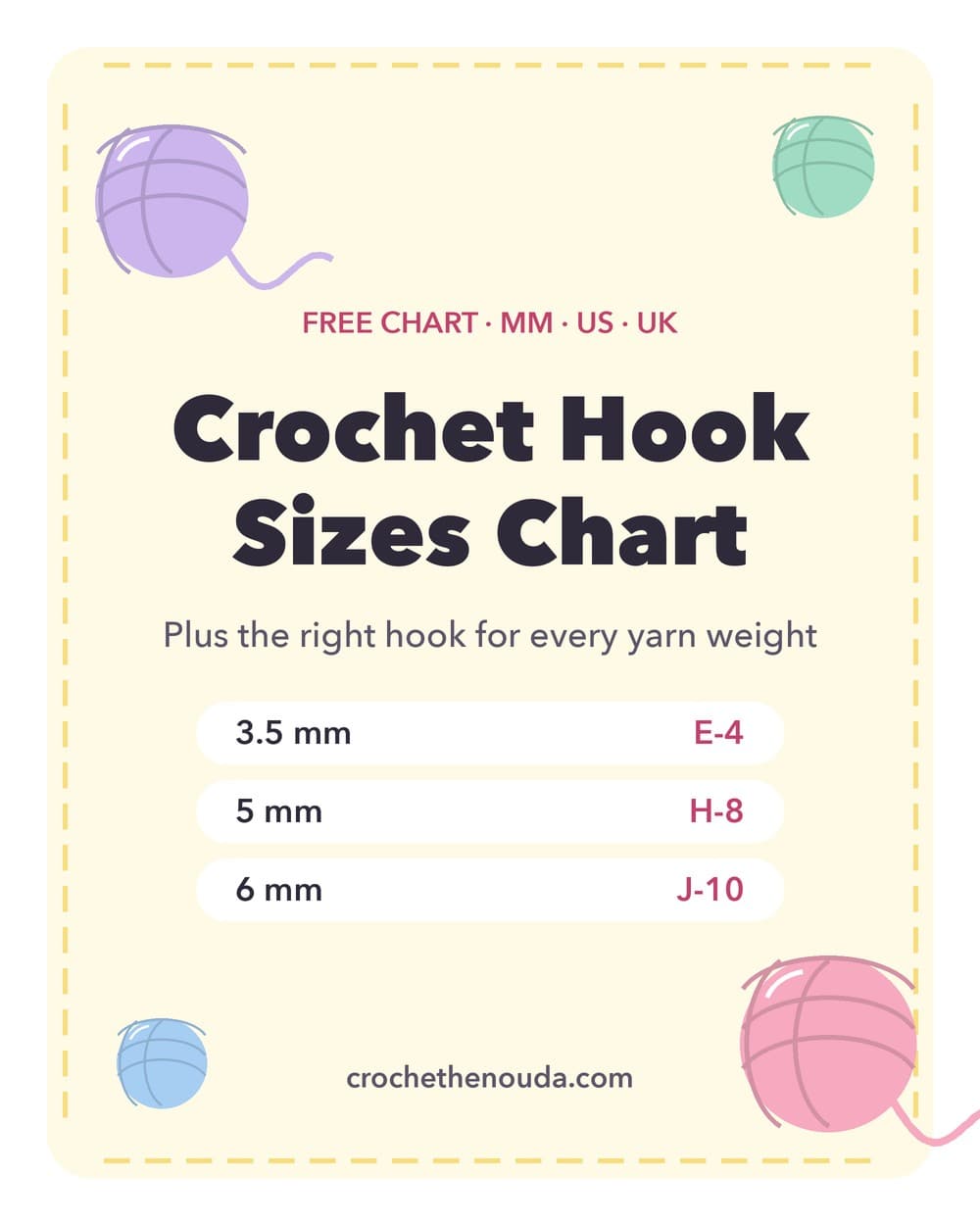
Crochet Hook Sizes Chart: mm, US Letters and UK Sizes
Every crochet hook size in millimeters, US letters and old UK numbers, plus which hook to use for each yarn weight.