 Crochet Henouda
How to Read a Crochet Pattern: A Beginner's Guide
Abbreviations, rows and rounds, repeats, stitch counts and gauge — everything you need to read a crochet pattern with confidence.
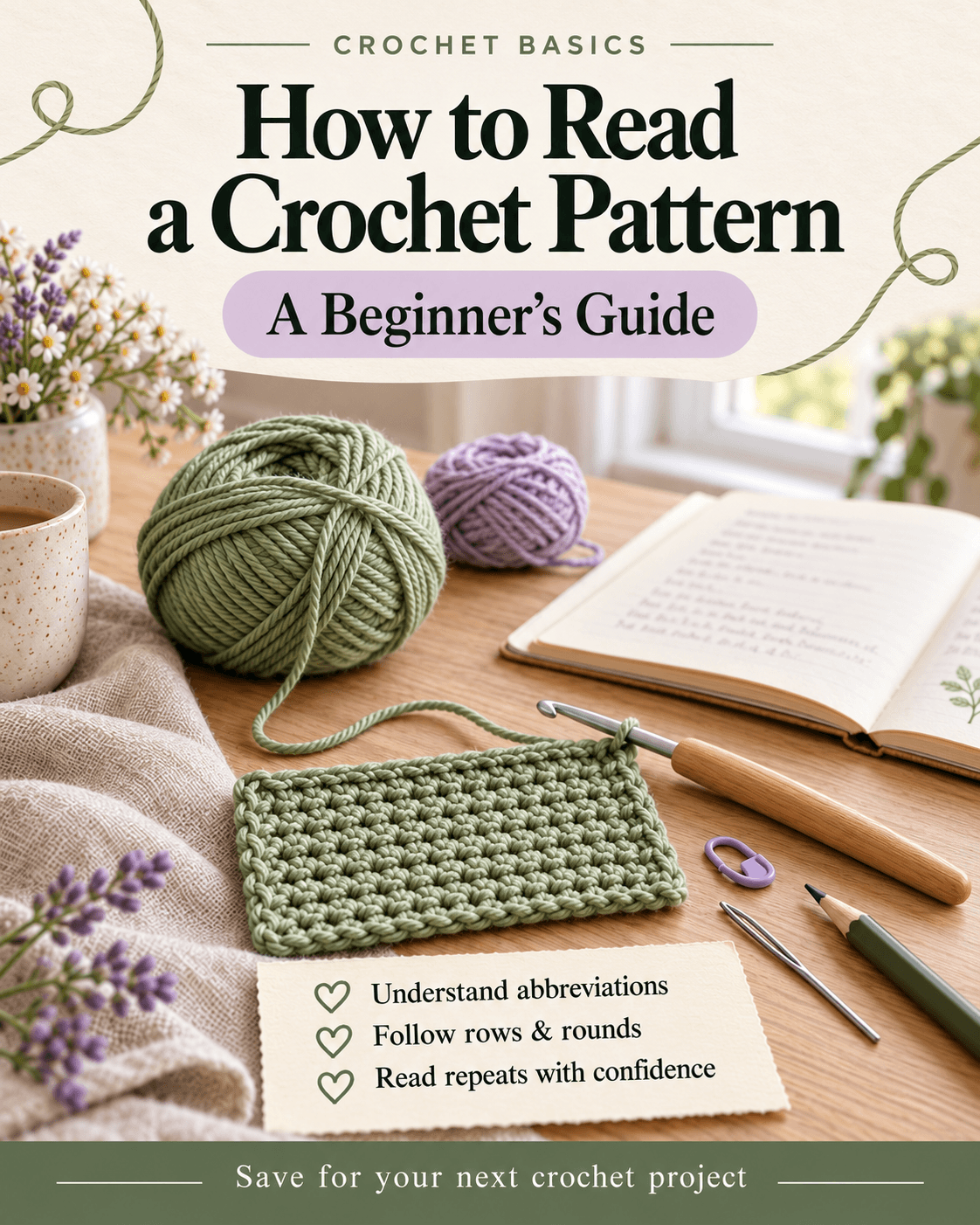
A crochet pattern can look like a secret code the first time you open one: "Rnd 3: *sc in next st, inc in next st* around. (18 sts)". But every pattern is built from the same few pieces, and once you know them, you can read almost anything.
This guide walks through a pattern from top to bottom: the materials, the gauge, the abbreviations, rows and rounds, repeats, and the stitch counts that keep you on track. Everything here uses US crochet terms, like every pattern on this blog.
If you'd rather learn with a printed pattern in your hands, you'll find ad-free PDF patterns in my Etsy shop.
The Parts of a Crochet Pattern
Most patterns follow the same order. Read the whole thing once before you pick up your hook.
- Skill level — beginner, easy, intermediate or experienced.
- Materials — yarn (weight, amount, color), hook size and notions like stitch markers or a yarn needle.
- Gauge — how many stitches and rows fit in a given size.
- Finished size — how big the piece will be.
- Abbreviations — the short forms the pattern uses.
- Notes — special instructions, like "the ch 1 does not count as a stitch".
- Instructions — row by row or round by round.
The notes are the part beginners skip, and they are often the part that explains why a stitch count doesn't add up.
Common Crochet Abbreviations (US Terms)
| Abbreviation | Meaning |
|---|---|
| ch | chain |
| sl st | slip stitch |
| sc | single crochet |
| hdc | half double crochet |
| dc | double crochet |
| tr | treble crochet |
| st(s) | stitch(es) |
| sp | space |
| sk | skip |
| inc | increase (2 stitches in the same stitch) |
| dec | decrease (work 2 stitches together) |
| sc2tog | single crochet 2 together |
| MR | magic ring |
| BLO / FLO | back loop only / front loop only |
| RS / WS | right side / wrong side |
| rep | repeat |
| FO | fasten off |
If a pattern uses "dc" for a short stitch and talks about "tension" instead of gauge, it is probably in UK terms — check my US vs UK crochet terms chart before you start.
Rows vs Rounds
Rows (written Row 1, Row 2) are worked back and forth. At the end of each row you turn your work and go back the other way. Scarves, blankets and cardigan panels are worked in rows.
Rounds (written Rnd 1, Rnd 2) are worked in a circle without turning. Hats, coasters and amigurumi are worked in rounds. A pattern will tell you whether to join each round with a slip stitch or to work in a continuous spiral, in which case a stitch marker in the first stitch of the round is essential.
Reading Repeats: Asterisks, Brackets and Parentheses
Repeats save the designer from writing the same thing twenty times. Three symbols do almost all of the work:
Asterisks * … * mark a sequence to repeat. "*Sc in next st, inc in next st*, repeat from * around" means: one single crochet, then one increase, then again and again until you reach the end of the round.
Brackets [ … ] usually group stitches that go into the same place or that repeat a set number of times: "[2 dc, ch 2, 2 dc] in next ch-2 sp" puts that whole group into a single space, the classic granny square corner.
Parentheses ( … ) often hold extra information rather than instructions — most importantly, the stitch count.
Tip: Before starting a repeat, read it aloud once: "single crochet, increase — single crochet, increase". It is surprisingly effective.
Stitch Counts: Your Best Friend
The number in parentheses at the end of a row, like (18 sts), tells you how many stitches you should have when that row is done. Count every time, especially at the beginning.
If your number is different, stop and look back before going any further. The usual suspects are:
- The turning chain. Patterns say whether the chain at the start of a row counts as a stitch. If it doesn't, don't work into it.
- The first and last stitches. They are easy to miss, especially the last stitch hiding under the turning chain.
- A missed increase or decrease in the middle of a repeat.
A stitch marker in the first stitch of every row or round makes counting much easier.
Gauge: Why It Matters
Gauge is written like this: "16 sc × 18 rows = 4 in (10 cm)". It tells you how tight the designer's stitches are. If yours are tighter, your project will come out smaller; if looser, bigger.
For a coaster or a toy, a small difference doesn't matter. For a sweater, it can mean the difference between a perfect fit and a cardigan that doesn't close. Crochet a small square, measure it, and change your hook if needed — my crochet hook sizes chart shows which way to go.
Practice With a Simple Pattern
The fastest way to learn is to read a real pattern while you work it. Start with something short worked in rounds, where you can check the stitch count every few minutes. My free pumpkin coaster pattern is made for exactly this: three rounds, clear counts, and step-by-step photos.
When you are ready for a bigger project, garments like the sunflower granny square cardigan use the same skills — squares worked in rounds, then joined.
Keep Going
Reading patterns gets easier with every project, and before long you won't even notice the abbreviations. When you're ready for your next project, take a look at the ad-free PDF patterns in my Etsy shop. Printing a pattern lets you tick off each row as you go — the easiest way to never lose your place.
Frequently asked questions
What does inc mean in crochet?
Inc means increase: you work two stitches into the same stitch, which adds one stitch to the row or round.
Does the turning chain count as a stitch?
It depends on the pattern, so check the notes. Usually the ch 1 before single crochet does not count, while the ch 3 before double crochet often does.
What do the numbers in parentheses mean in a crochet pattern?
They are usually the stitch count: how many stitches you should have at the end of that row or round. Count your stitches and compare before moving on.
What is the difference between a row and a round?
Rows are worked back and forth and you turn at the end of each one. Rounds are worked in a circle without turning, either joined with a slip stitch or in a continuous spiral.
More tutorials you’ll love
 Tutorials
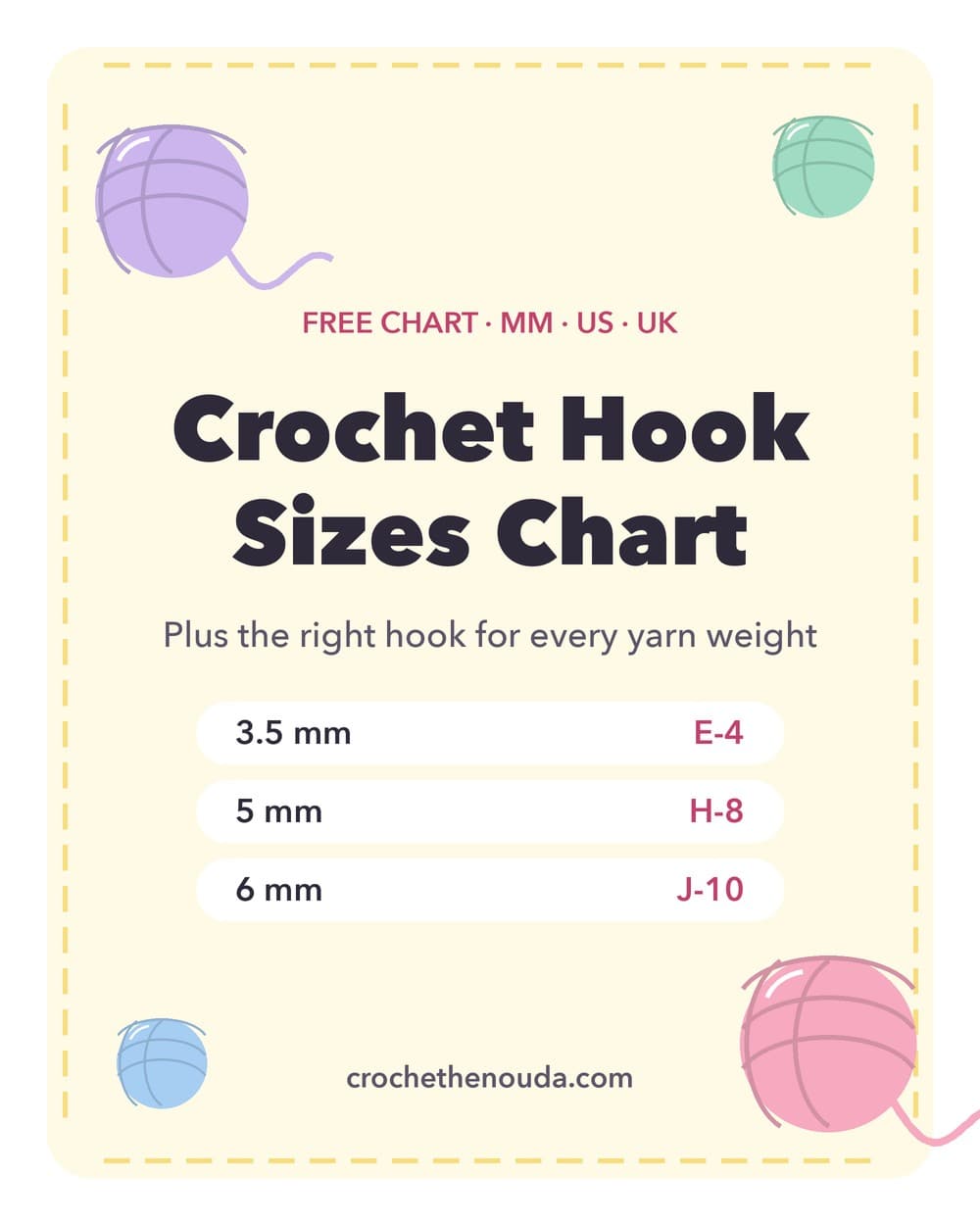
Crochet Hook Sizes Chart: mm, US Letters and UK Sizes
Every crochet hook size in millimeters, US letters and old UK numbers, plus which hook to use for each yarn weight.
 Tutorials
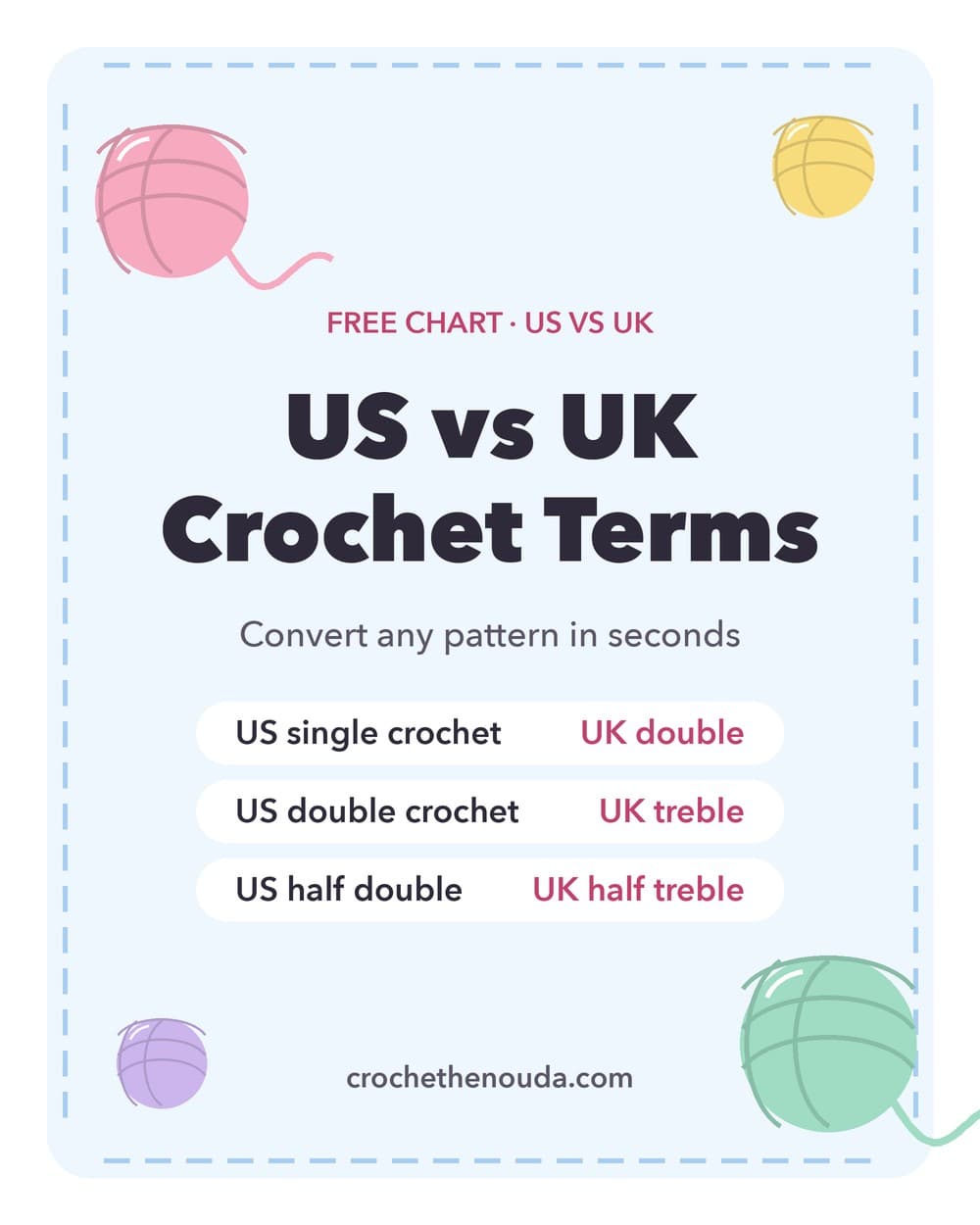
US vs UK Crochet Terms: Free Conversion Chart
Why a UK double crochet is a US single crochet, a full US to UK conversion chart, and how to tell which terms a pattern uses.